Product mining is becoming a key technology for data-driven decisions in product management. Unlike traditional product mining software, which targets inefficiencies in the existing portfolio, our approach to future product mining identifies critical features of planned products at an early stage—before unnecessary costs arise. The result
Profitable growth
Reduced complexity and
Fact-based decisions
throughout the entire product lifecycle.
Unlike traditional product mining analytics, which are mostly backward-looking, our Future Product Mining uses modern predictive analytics to make informed decisions early in the development phase – long before complex structures become entrenched.
Benefits
The benefits of product mining for companies
Companies that use product mining in a targeted manner benefit on several levels:
Reduction of internal complexity by eliminating non-value-adding features
Faster time-to-market thanks to leaner product structure
Cost reduction in development, procurement, and variant management
Sound data insights for strategic portfolio decisions
Resource efficiency and CO₂ savings through reduced variety
Boundaries
Why the traditional approach is insufficient
Traditional product mining approaches focus primarily on analyzing internal product usage. This has several disadvantages:
Complexity arises not only at the level of individual articles, but also through combinatorics in the various modules
Items are often used in various modules and variants, so eliminating them can quickly lead to a loss of revenue
Once an item has been created, a large part of its costs have already been incurred irreversibly
The analysis is not based on the number of items, but on features and feature combinations – directly from a market perspective. This makes it possible to identify and eliminate internal complexity drivers without losing customer value.
Complexity related to the past has already incurred costs. It is more important to focus on clear structures from the outset when developing new products. This is precisely why Portfolio Analytics was developed with Cquenz.
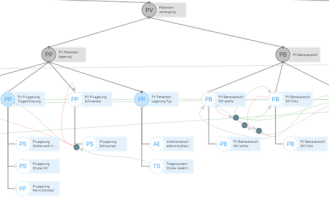
Cquenz fully maps all product rules, module structures, and variant relationships. Thanks to integrated simulations, the impact of individual features on sales, costs, complexity, and carbon footprints can be directly evaluated. Real-time decision support.
Product mining of the future – here's how it works
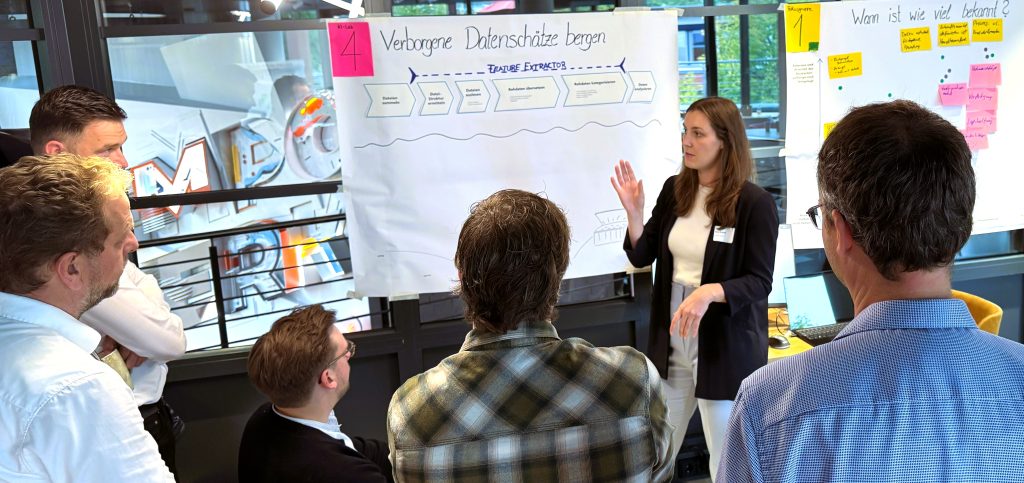
Unlike conventional tools, which only look back, Cquenz offers “future product mining” in five steps. Thanks to an individually tailored data collection strategy, there are no input requirements for data quality. The result: a fact-based system for evaluation and optimization—long before high costs arise.
1
Data
Data collection via cloud analytics or static, depending on requirements and data quality
2
Scenarios
Generation of future scenarios through trend and portfolio analyses
3
Analyse
Use of machine learning and data mining software to identify non-value-adding structures.
4
Modell
Modeling of the planned product with all its rules, features, and variants.
5
Effects
Simulations for revenue impact, cost effects, economies of scale, and sustainability metrics.
Data mining software, tools, and platforms extract the necessary data from various systems within the company, such as ERP, PLM, CPQ, or CRM, and prepare it for product mining. With the right data mining approach, even companies whose systems are still fragmented can benefit from product mining. This makes it possible for medium-sized companies with low levels of order processing automation to use product mining. In addition, this approach also allows data sources that have not yet been integrated into the relevant system landscape, such as IoT data, to be integrated.
One manufacturer used our approach to identify overlaps across different product lines – technically complex, but with no impact on sales. At the same time, we were able to identify format ranges that are in demand on the market but are not covered by existing machines. Small changes led to a significant increase in sales in the first six months, while at the same time reducing the number of variants.
IoT data is becoming an increasingly relevant source for product mining. In the development of reach trucks, IoT data from over 14,000 vehicles was analyzed for the first time and combined with our product mining methods. The result: a product tailored to the actual use cases of customers.
Our simulations enabled a transmission manufacturer to develop a strategy for pre-developing the right components and modules and making them available as stock items—with the aim of reducing the average development time per order by two weeks and the procurement time by 35 weeks.
From manufacturing to configuration – is that really possible? How Wietmarscher Ambulanz-
Conclusion
Future Product Mining as the key to scalable growth
Future Product Mining combines modern data analysis with strategic product development. The key difference: instead of analyzing past mistakes, future opportunities are identified and simulated.
Cquenz is the first platform to offer companies a combination of product mining, configuration logic, decision support, and business intelligence in a single system. For organizations looking to reduce product complexity and increase value creation, product mining is much more than a tool—it is a strategic lever for long-term excellence.